News
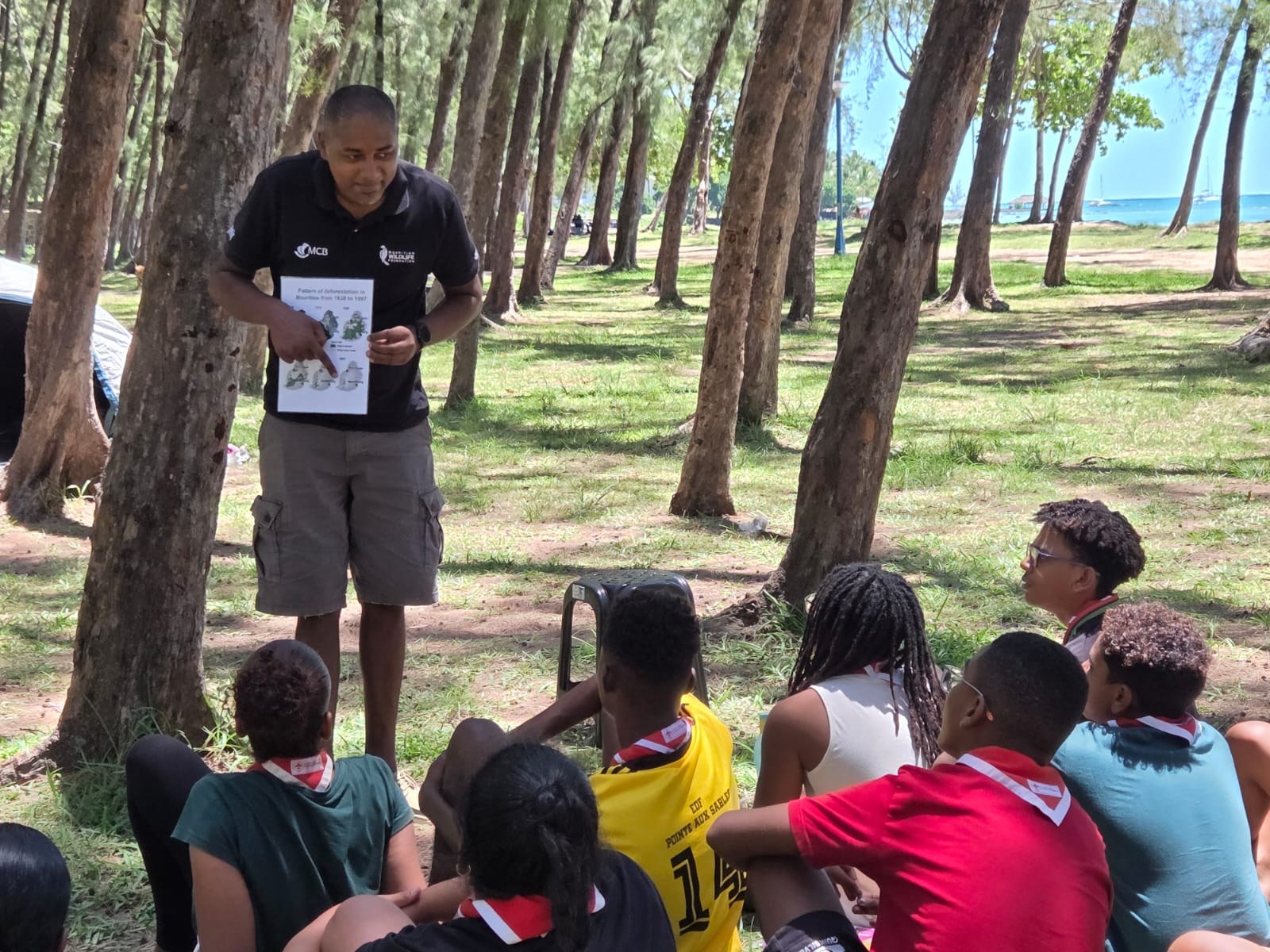
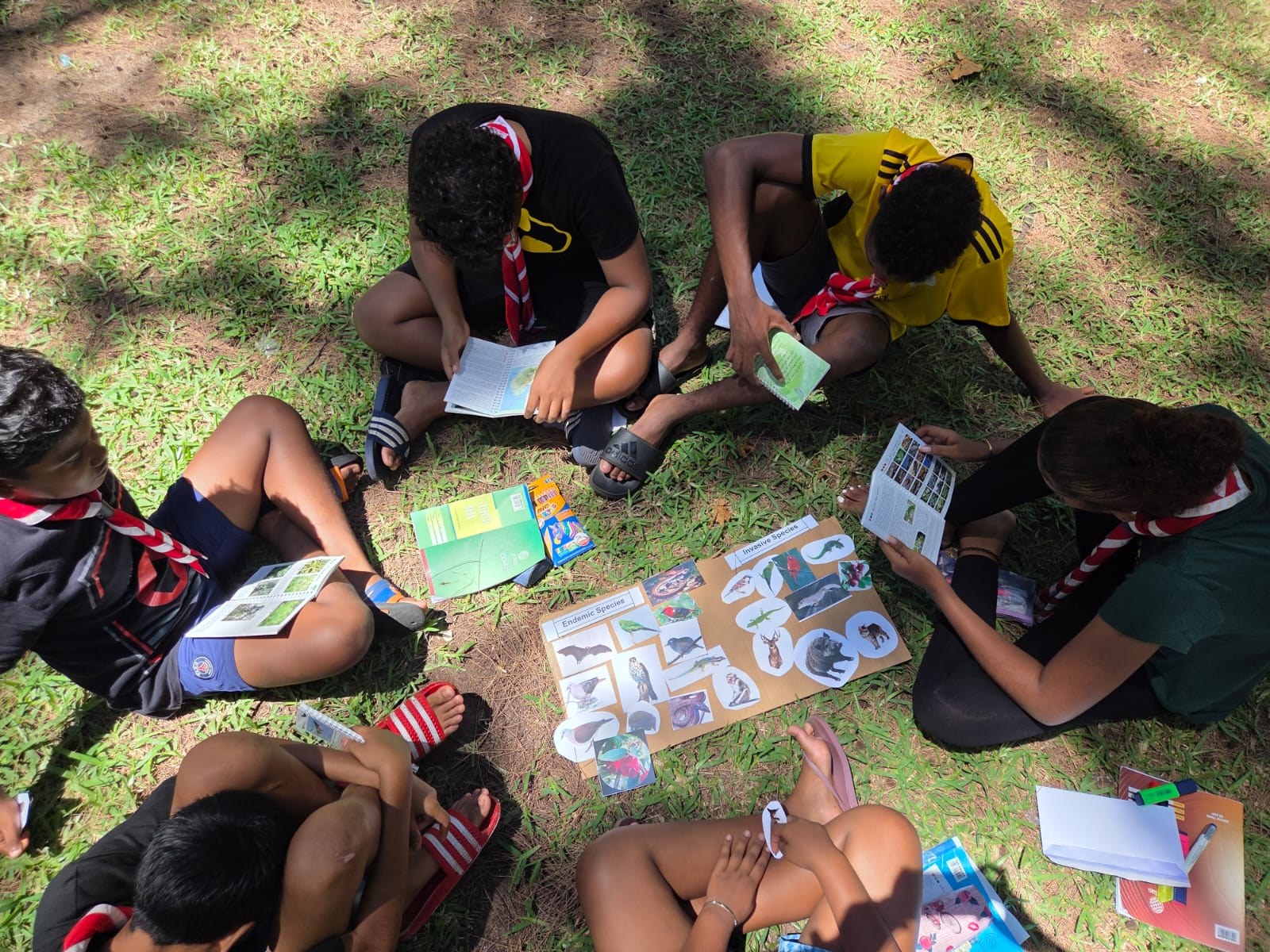 A group of 21 children from the Scouts movement recently took part in an outdoor environmental education session organised by the Mauritian Wildlife Foundation (MWF) at Mont Choisy beach, in the context of the Connecting with Nature programme. The two-hour activity was facilitated by Benny Henry, Education Assistant at MWF, and supervised by Scout leader Brigitte Oh Aye. The session focused on introducing the young participants to the natural history, biodiversity, and conservation challenges of Mauritius.
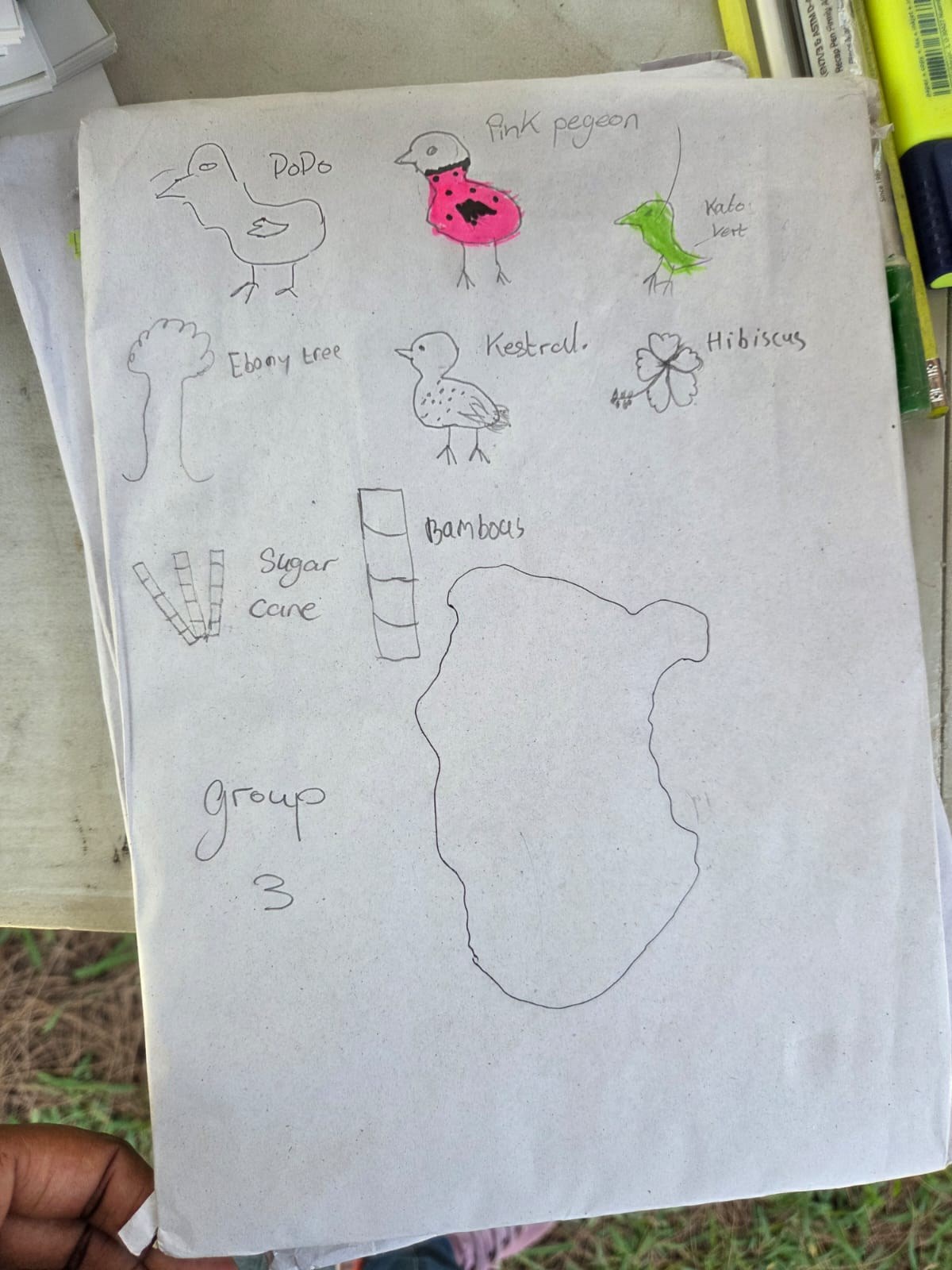
The activity began with a creative exercise in which the children were divided into small groups and asked to draw what Mauritius might have looked like before humans arrived. Many of the drawings included animals such as the Dodo and giant tortoises, as well as dense native forests that once covered the island.
This was followed by a storytelling session about the formation and history of Mauritius. The children learned that the island was created by volcanic activity around nine to ten million years ago, while the nearby island of Réunion Island formed much later. The discussion also touched on the arrival of early visitors and settlers, including Arab navigators, Portuguese explorers, and later Dutch, French, and British colonists, before Mauritius eventually became an independent nation.
 Participants were then introduced to the concepts of endemic, indigenous, and exotic species. The extinct Dodo was used as an example of an endemic species found only in Mauritius, while the White-tailed Tropicbird was mentioned as an example of a native species that arrived naturally. Exotic species were explained as being those brought to the island by humans.
During the discussion, the children were asked to identify the only native mammal of Mauritius, which is the Mauritius Fruit Bat. Other important endemic birds, such as the Mauritius Kestrel and the Pink Pigeon, were also presented, highlighting the importance of protecting the island’s remaining native forests.
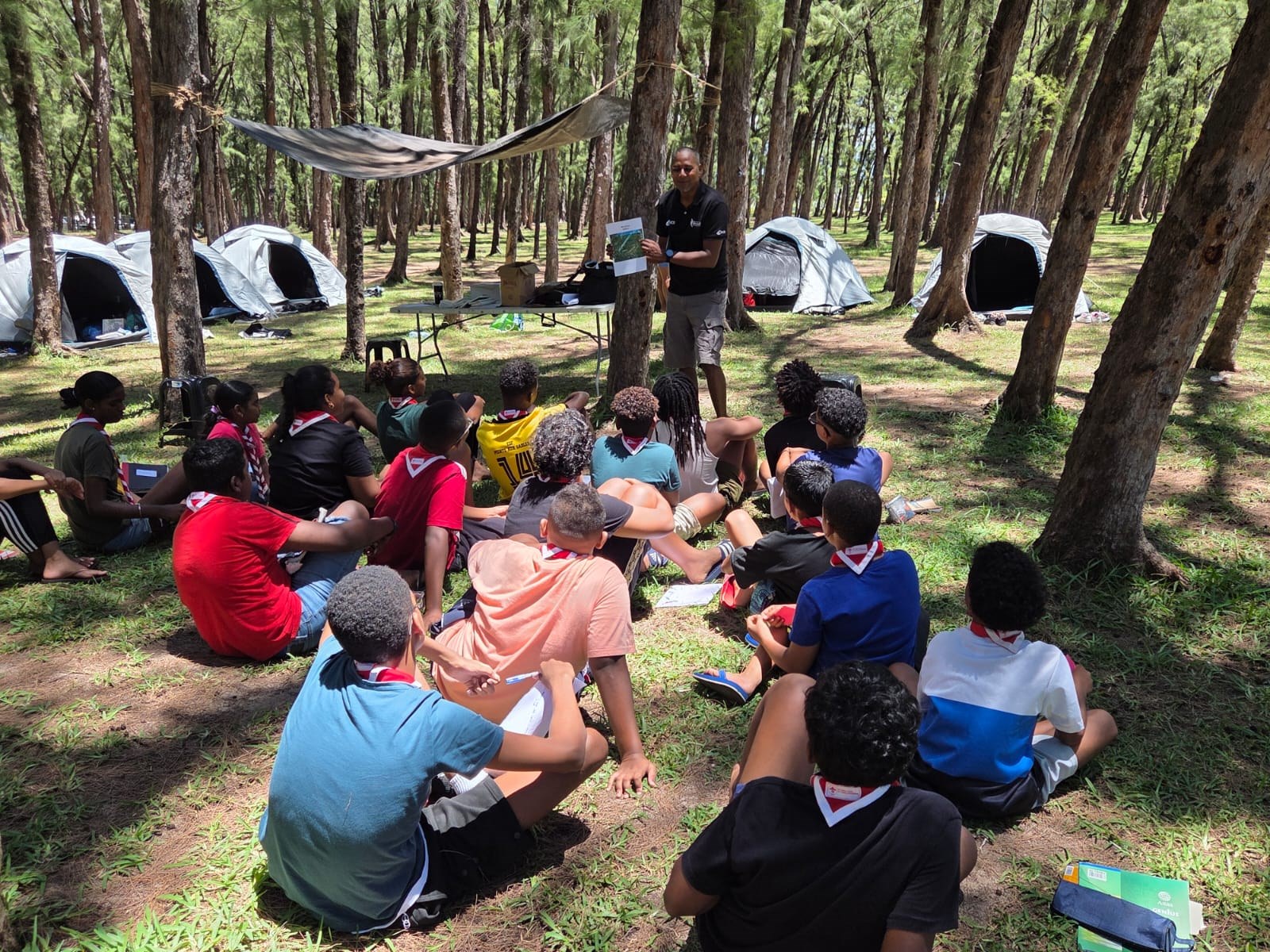 The session also explored how Mauritius has changed over time. Children learned that the island was once almost entirely covered in forest, while today, less than two percent of the original endemic forest remains. The extinction of the Dodo was used as an example of how hunting, habitat loss, and introduced animals can lead to the extinction of endemic and native species.
The session concluded with group activities including species classification, a biodiversity crossword puzzle, and a short introduction to nature observation using binoculars. Although wildlife sightings were limited at the beach location, the activities encouraged curiosity and helped reinforce what the children had learned.
 Overall, the session provided an engaging introduction to the Mauritian biodiversity and conservation, helping young participants better understand the island’s unique wildlife and the importance of protecting it for the future.
The Connecting with Nature Programme, sponsored by MCB Group was set up in 2020 following the Education Strategy workshop facilitated by Chester Zoo held in September 2019. The programme comprises awareness events relative to the conservation of endemic flora and fauna of Mauritius with various audiences. For example, school children get better acquainted with the biodiversity of Mauritius through presentations, discussion sessions and games. They are sensitised to the threats to the native ecosystem and learn about the problems caused by introduced invasive species.