

News
Chromolaena odorata, is one of the most aggressive invasive alien plants in the tropics. Native to Central and South America, this fast-growing perennial shrub spreads rapidly. It forms dense, tangled thickets that can reach over two metres and clambers over other plants. Its prolific seed production, from 93 000 to 1 600 000 seeds per plant per year, allows it to establish almost anywhere warm. Those seeds are dispersed through wind and also can stick to fur, feathers or clothing. Small seeds may also attach to vehicles or get embedded in mud and be moved by vehicles. This pest plant has reached the shores of Round Island off the north-east coast of Mauritius. Strictly protected as a Nature Reserve, Round Island is one of the country’s most important conservation sites, harbouring rare reptiles such as the Keel-scaled Boa (Casarea dussumieri) and the Telfair’s Skink (Leiolopisma telfairii), as well as a number of critically endangered endemic plants ranging from trees (Round Island Bottle Palm, Hyophorbe lagenicaulis) to herbs (Phyllanthus revaughanii). Since the 1970s, Round Island has been the focus of intensive restoration, including the removal of goats and rabbits, and the replanting of native, vegetation.
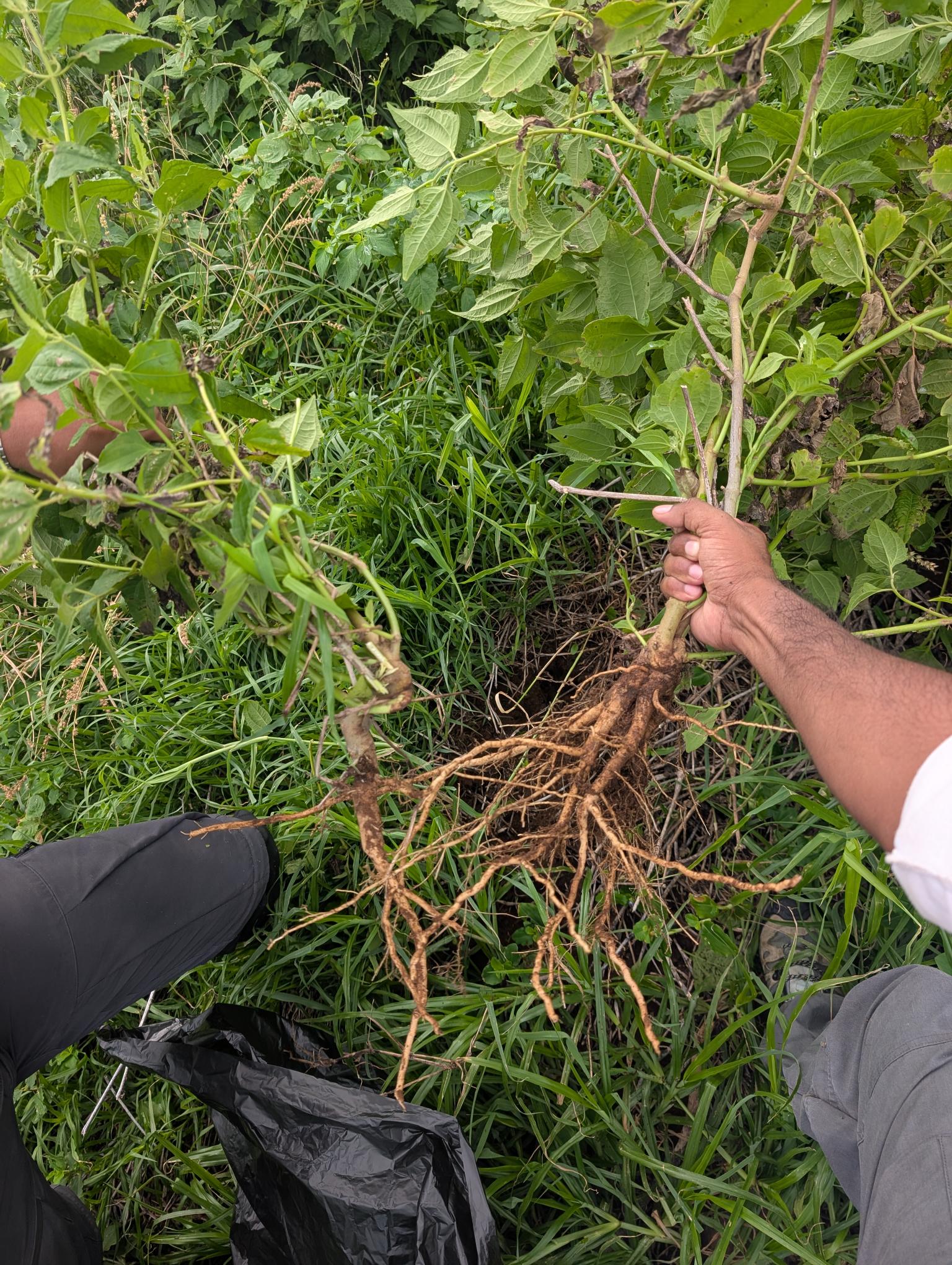
The presence of Chromolaena odorata on the island threatens decades of conservation work. On Round Island, the plant can outcompete native vegetation, smothering low-growing herbs and young seedlings and preventing the natural regeneration of fragile endemic flora. Scientists working in other regions have also noted that Chromolaena odorata may alter soil chemistry and release allelopathic compounds, further suppressing native plant growth.
Even more alarming is the risk of wildfire. The plant’s dry, fine stems can ignite readily in the island’s dry season and fuel fires, endangering fire-sensitive plants, nesting seabirds and the unique reptiles that depend on the island’s habitat.
To protect the precious Round Island ecosystem, the Mauritian Wildlife Foundation and its partners carry out regular control of this weed. Teams uproot Chromolaena odorata plants by hand and revisit cleared areas frequently to remove seedlings that sprout. The field team does a tedious manual removal of the pest, stores all plant materials in a barrel until they can be sent to mainland Mauritius where they are discarded. Whilst we do not favour the use herbicides in nature reserves, their strictly controlled use has been recommended by experts as part of an integrated management approach.
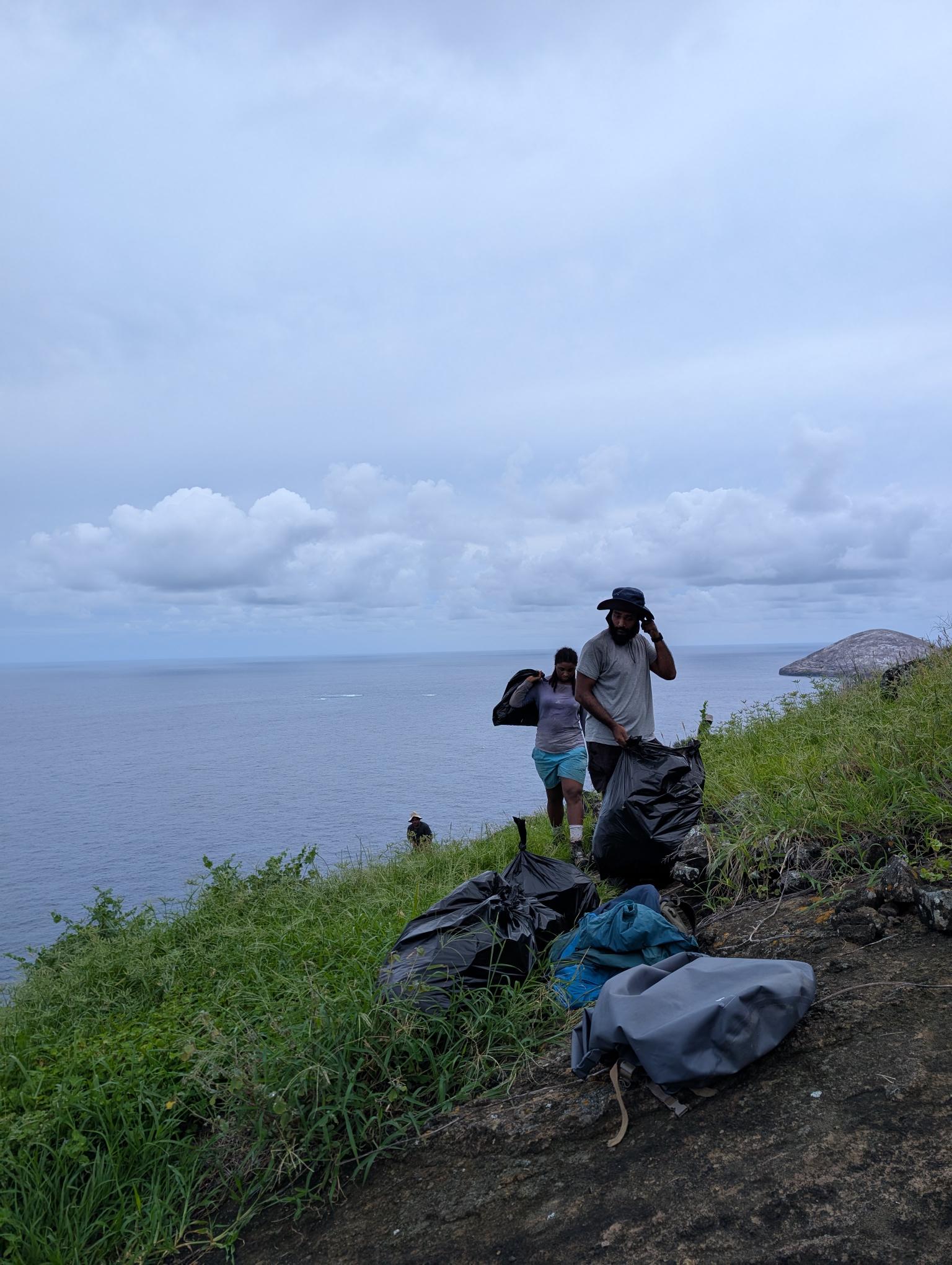
The team doing the weeding also take precautionary measures to avoid spreading seeds which may be stuck to their shoes. When the weeding is completed, they aim for a rocky area where they brush any seeds off their shoes directly into bin bags. It is a challenging and ongoing task, but one that is essential to safeguard Round Island’s hard-won restoration gains.