News
In late 2024, Mauritius lost yet another irreplaceable part of its natural heritage. The last known individual of the Round Island Hurricane Palm (Dictyosperma album var. conjugatum) in the wild was tragically blown down during a windstorm. With its fall, this unique variety of the Hurricane Palm became officially extinct in nature.
As far as we know, the Dictyosperma album var. conjugatum was found exclusively on Round Island, making it one of three recognised varieties of the Hurricane Palm. The other two varieties include Dictyosperma album var. album, which grows in Mauritius and La Réunion, and Dictyosperma album var. aureum, which is exclusive to Rodrigues and now survives as a single remaining wild individual.
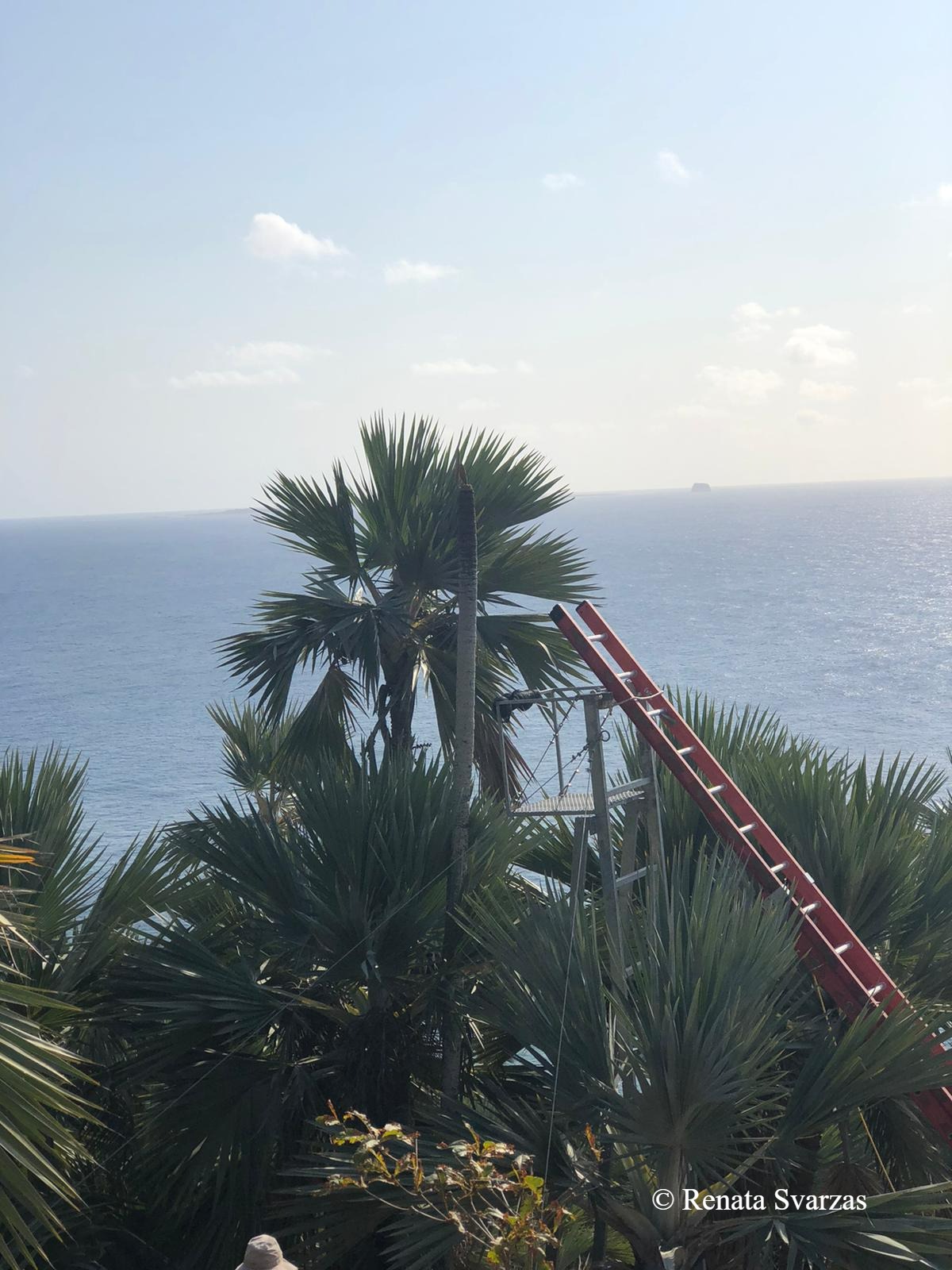
Towering at an impressive height of up to nine meters, the last wild Round Island Hurricane Palm was remarkable for its dense crown and striking fronds, which had a subtle pale-blue hue. This species had played a crucial role in supporting the unique ecosystem of Round Island, providing habitat and resources for specialized insects, geckos and boas.
The decline of this variety can be traced back to the 19th century, when invasive species such as rabbits and goats were introduced to Round Island. These introduced animals devastated the island’s vegetation by consuming seedlings and stripping away topsoil, making it difficult for palm trees to regenerate naturally. By 1994, only two individuals of Dictyosperma album var. conjugatum remained in the wild. Tragically, one was lost to Cyclone Hollanda that year, leaving a single standing survivor, until its fall in 2024.
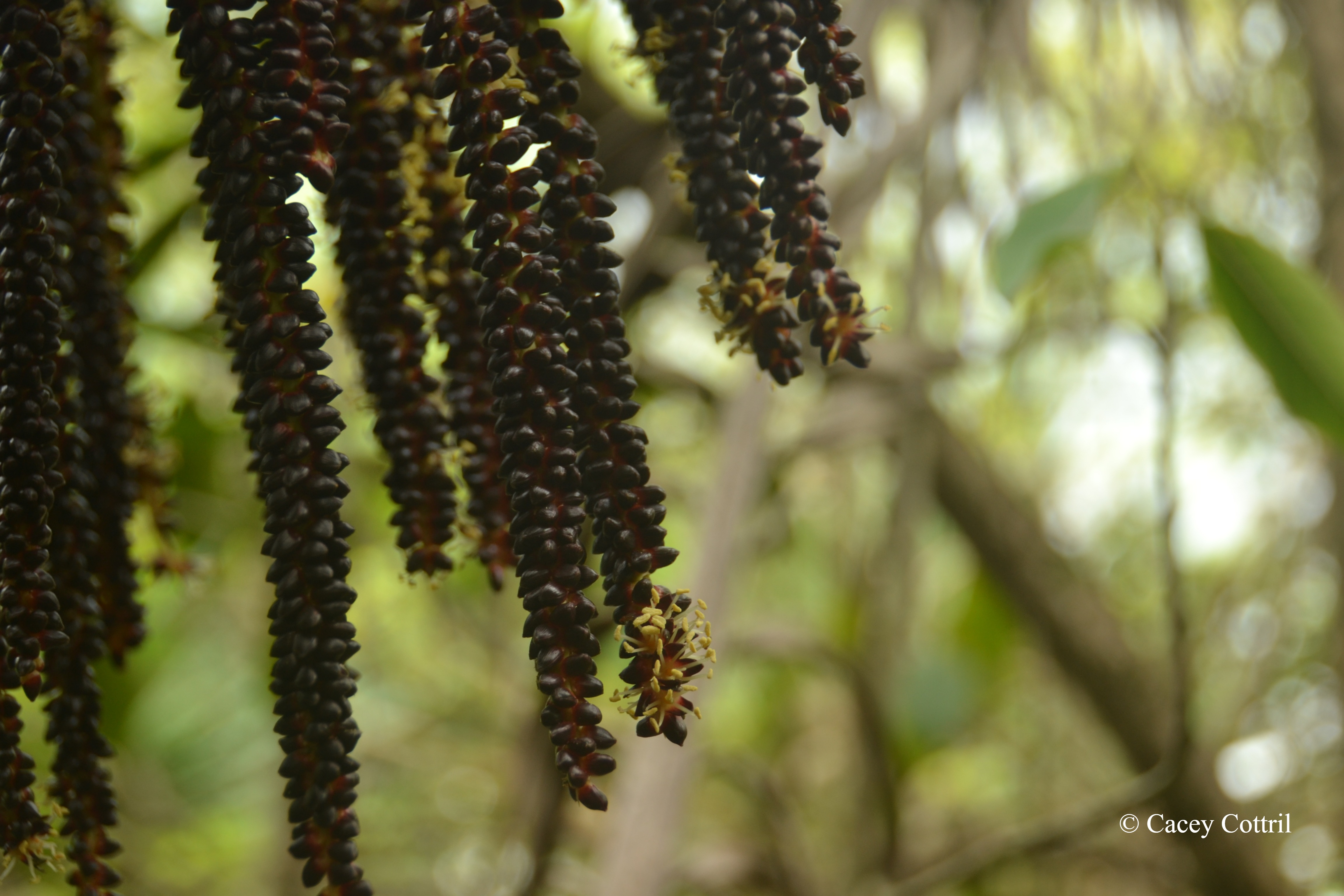
Despite this setback, there is still a glimmer of hope for Dictyosperma album var. conjugatum. Recognizing the urgency of conservation efforts, scientists and conservationists had collected seeds from the last known individuals in the early 1990s. These seeds were successfully germinated, and seedlings were planted in various protected locations, including Ile aux Aigrettes, Black River Gorges, and Mondrain.
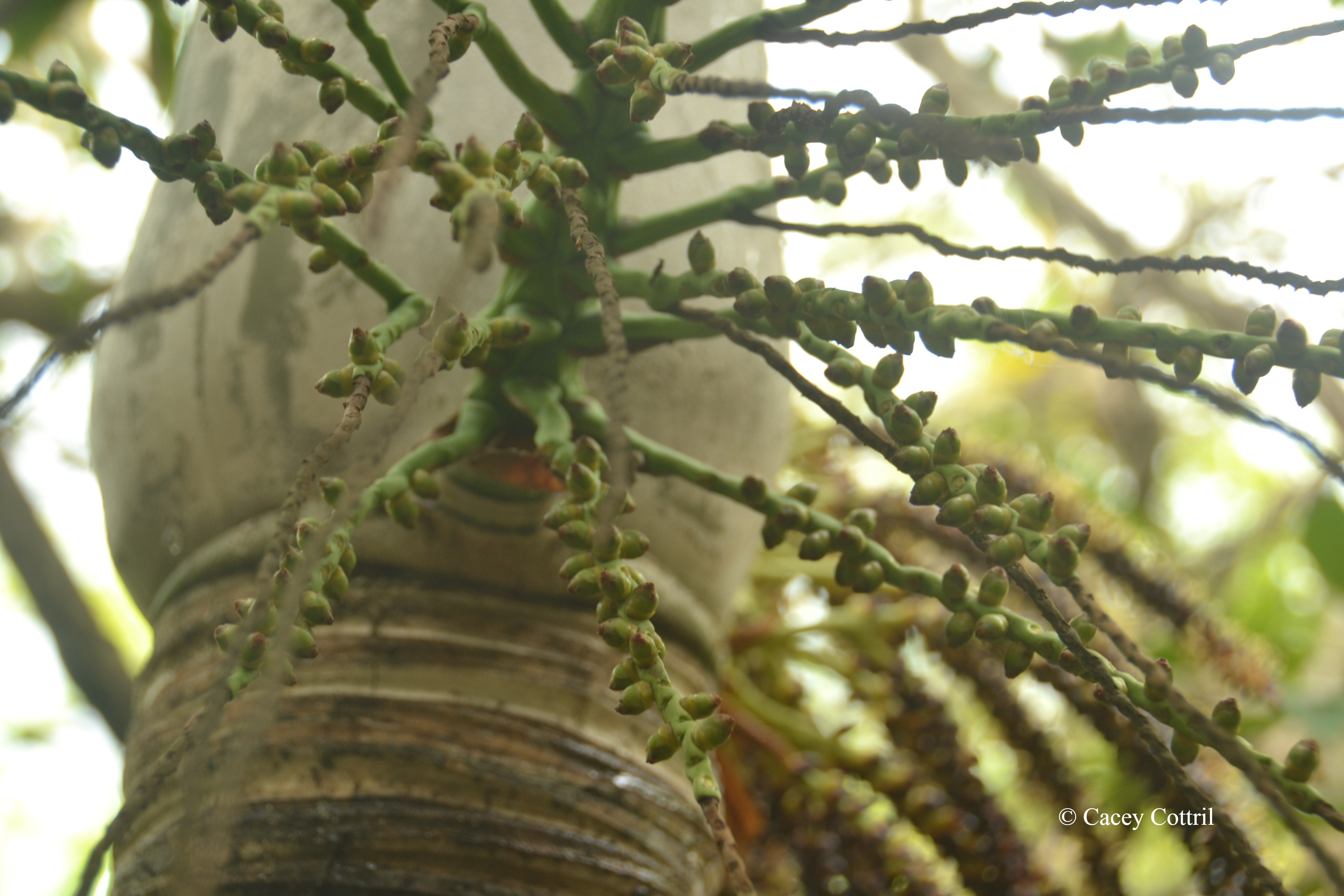
To preserve its genetic integrity, a collaborative cross-pollination project was initiated by Durrell and MWF staff while the last Round Island individual was proudly standing. Pollen from flowers of this tree was carefully transferred to pistils of flowers of trees growing on Ile aux Aigrettes to preserve as much of its unique genetic traits as possible. Seedlings resulting from this project have now been reintroduced to Round Island with funding and support from the Franklinia Foundation, Durrell Wildlife Conservation Trust, and the Government of Mauritius. While some of the reintroduced individuals have begun producing fruit on Ile aux Aigrettes and in Black River, a new challenge has emerged, hybridization. There is a risk that these young seedlings could have crossbred with Dictyosperma album var. album, a different variety of the same species, potentially diluting the unique genetic makeup of Dictyosperma album var. conjugatum. To verify this fear, conservationists from the Durrell Wildlife Conservation Trust, Mauritian Wildlife Foundation and University of Cardiff (UK), with permission from the National Parks and Conservation Service are planning a comprehensive genetic screening to ensure that only pure individuals of Dictyosperma album var. conjugatum are reintroduced to Round Island.
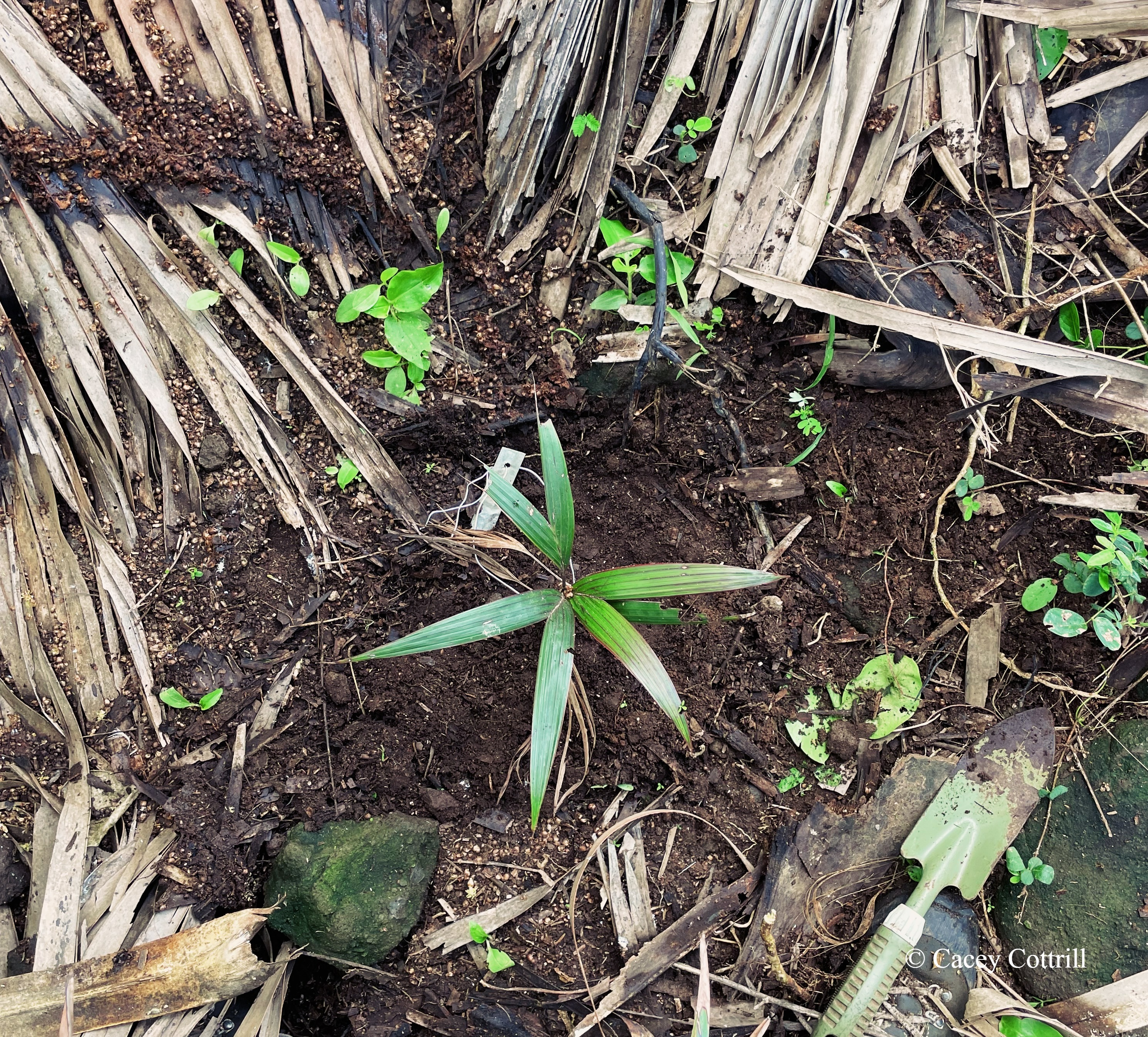
More work is needed but, hopefully within a few decades, we will have confirmed Dictyosperma album var conjugatum reintroduced to Round Island. This is why no hope is lost, yet. Conservation, as we know, is a long term process, --- and challenging!