



News
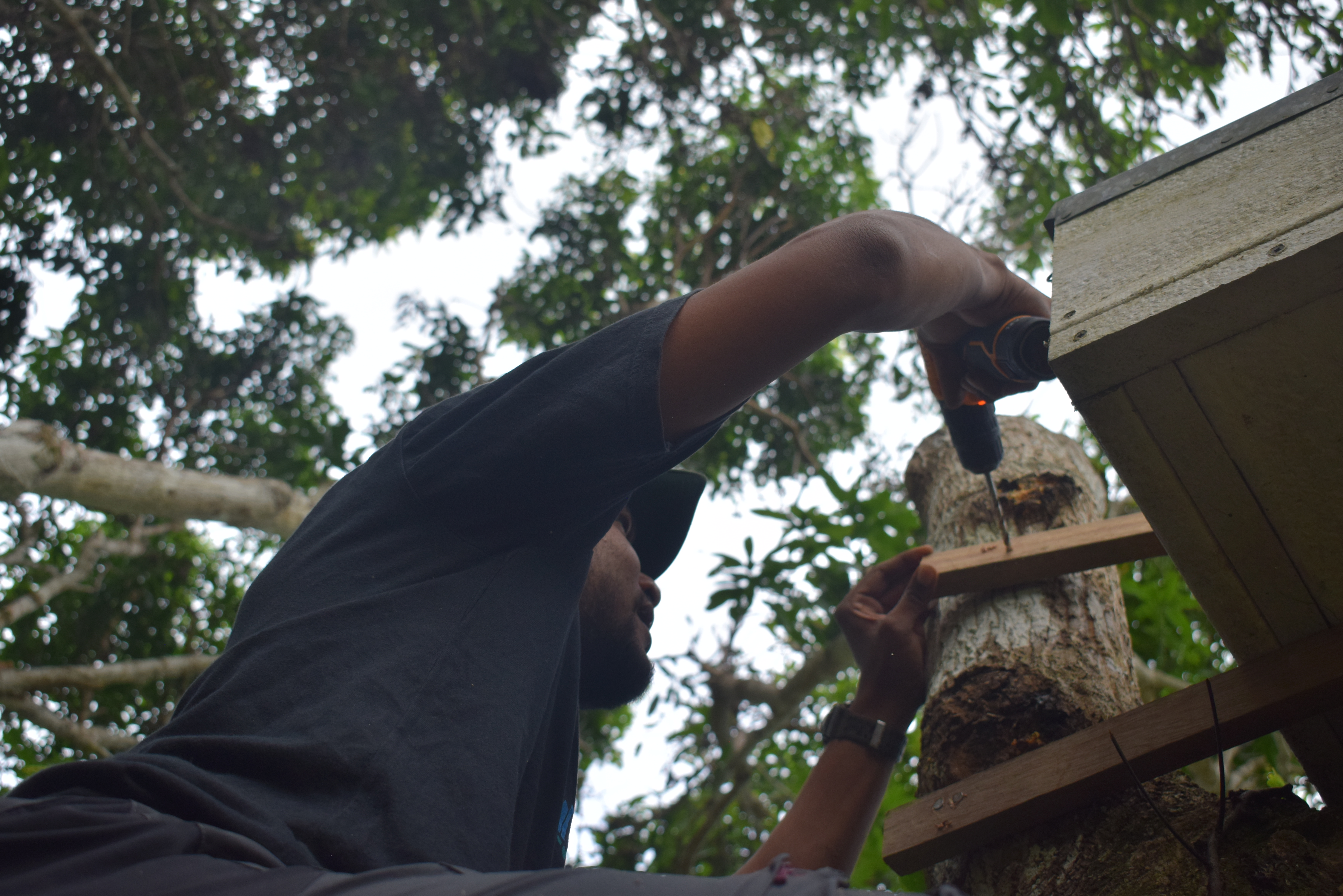
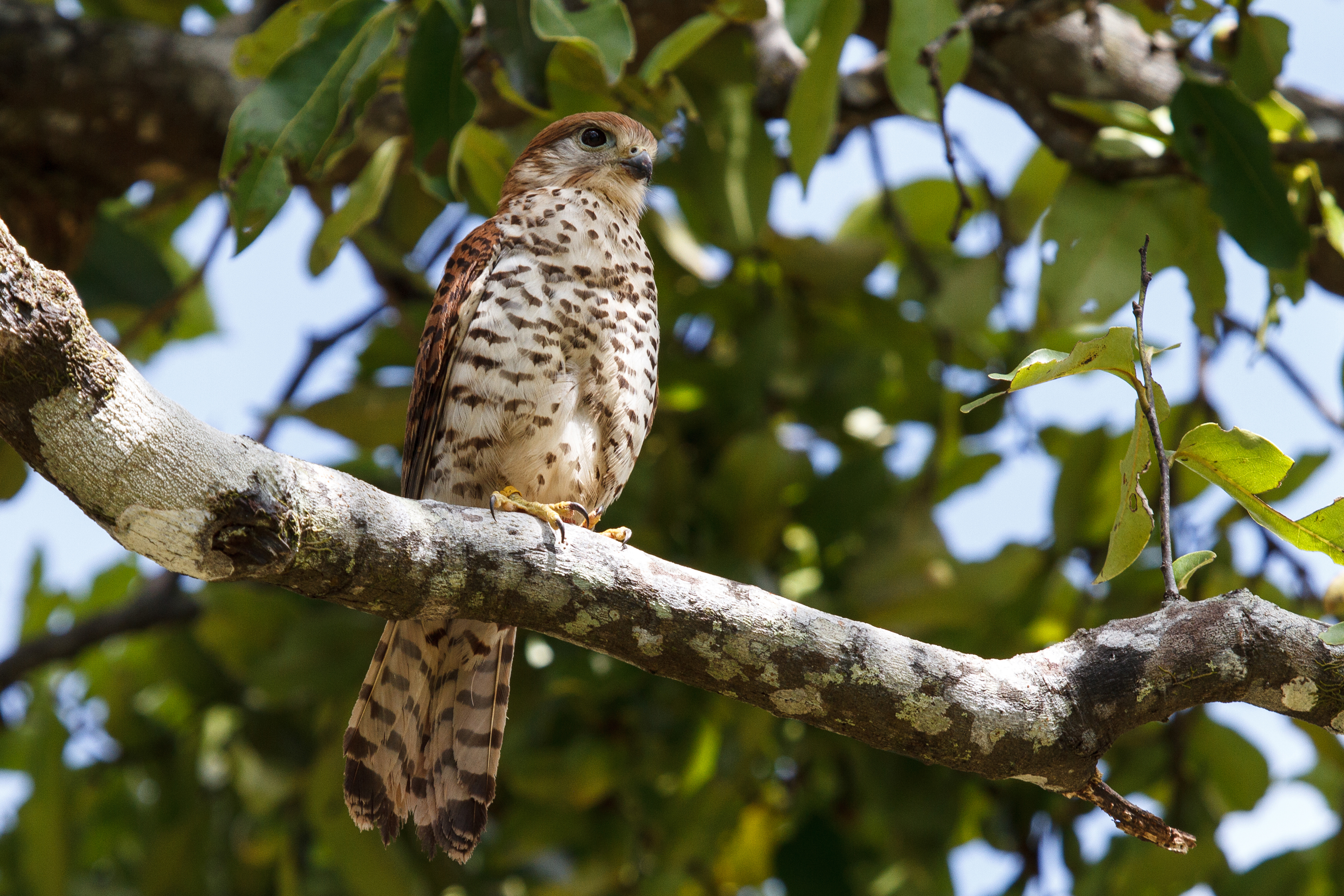
When the Mauritius Kestrel breeding season comes to an end in February, the MWF Mauritius Kestrel team begin cleaning and maintenance work on their network of nest boxes which consists of some 138 nest boxes installed in the Black River Gorges National Park in the country’s west coast and in surrounding areas, mainly, Brise Fer, Black River, Case Noyale, Chamarel and Bel Ombre and in the East Coast subpopulation in the Bambou mountain range. The Mauritius Kestrel is a secondary cavity nester i.e., it uses naturally occurring cavities in cliffs and trees for breeding. These naturally occurring cavities are limited in Mauritius as invasive alien species will compete for cavities and exclude the Mauritius Kestrel.
Nest boxes must be as clean and hygienic as possible, should be securely fastened to the tree and should provide shelter from the weather. The recovery of the Mauritius Kestrel population from a handful of individuals to a few hundred would not have been possible without the use of nest boxes. Good quality breeding sites are too limited within Mauritius, without nest boxes breeding productivity would have always remained too low in the wild. “Nest boxes have also been beneficial to our field teams as they facilitate the monitoring and management of the species”, says Sion Henshaw, Fauna Manager of MWF. The nest boxes provided by the team are specifically designed to exclude certain predators, for instance, the length of the nest box prevents monkeys (Macaca fascicularis) from reaching into predate eggs or chicks.
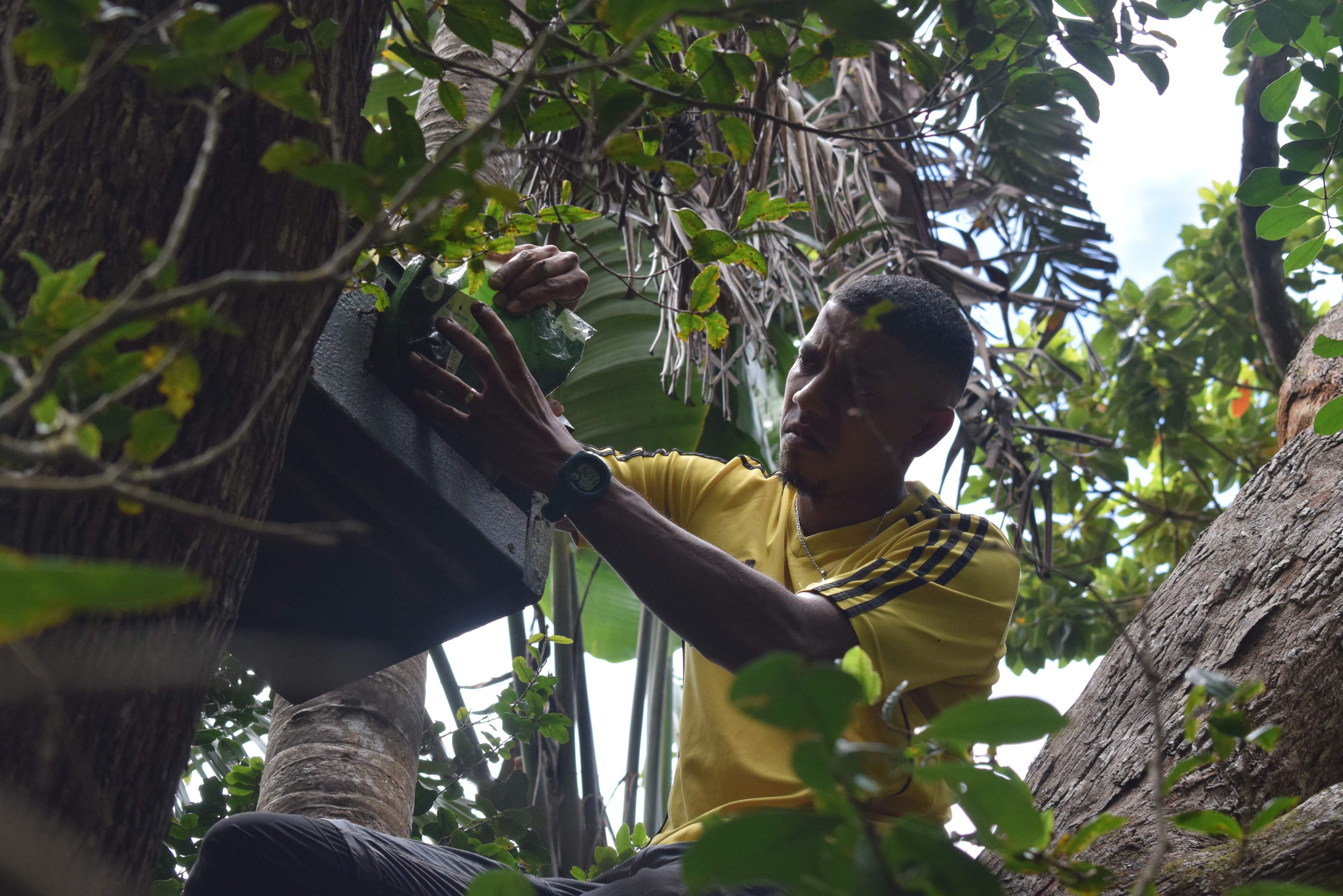
These maintenance works are critical as they lay the foundation for the success of the next breeding season. We followed MWF staff Josua Hollandais, Mauritius Kestrel Project Assistant Coordinator, and Jauffrey Maurer, Mauritius Kestrel Project Conservation Biologist, on one of these trips.
Early morning, Josua and Jauffrey are already in the field, slowly but surely driving off-road on difficult dirt tracks in the ‘Bon Courage’ (southwest Mauritius) deer hunting grounds towards the few Mauritius Kestrel nest boxes in the area. As they arrive near the first site, they notice that the box has fallen out of the tree. “It might be due to strong winds which the country has experienced during this cyclonic season”, says Josua. Without delay, both staff remove some equipment from the van and start working on replacing the nest box, in a space between the trunk of the tree and one of its main branches.
Josua proceeds to climb up the tree. He then nails, some pieces of wood to the nest box, to strengthen it and makes sure that it is prepared to face strong winds. Jauffrey helps by handing his field partner the equipment needed. A battery powered drill is also used to fix the nest box in its place. As soon as it is secure, Josua cleans the box inside and adds some fresh coral sand (nesting material that mimics the substrate found in cliff cavities where the Mauritius Kestrel breeds naturally).
A reminder that the survival of endemic species relies on many and sometimes independent factors. The unhatched egg is noted for reporting and the nest box is cleaned and filled with coral sand in anticipation of the next breeding attempt later this year.
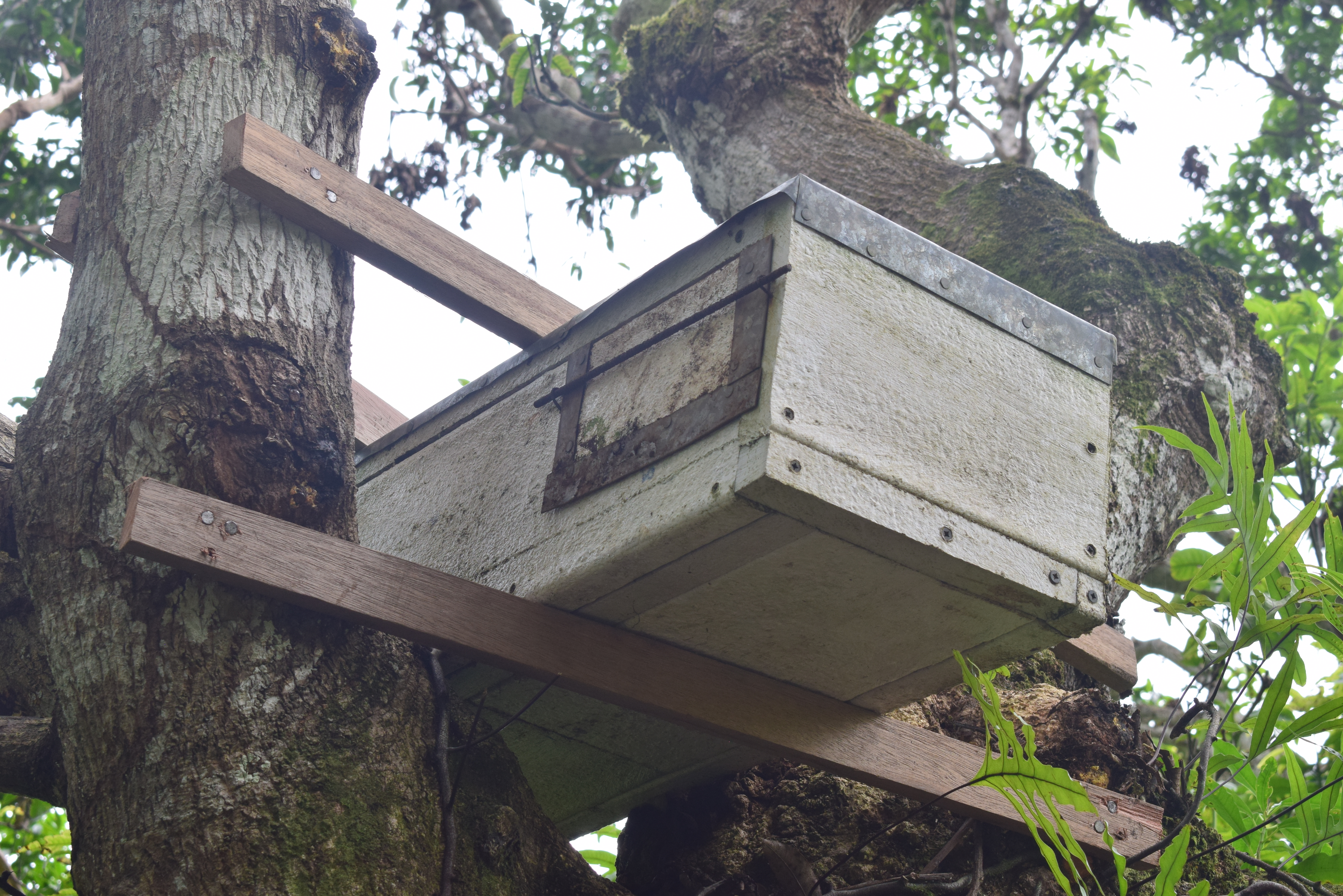
All the 138 nest boxes placed across Mauritius will have been cleaned and repaired the natural cavities visited needed to ensure that Mauritius' National Bird has appropriate sites to keep breeding and for the species to continue to thrive.
Having experienced a severe population bottleneck, and to counter the impact of inbreeding depression, in the future, MWF is exploring implementing genetic management of the Mauritius Kestrel. “Genomic research has started for the Mauritius Kestrel, and this will inform the genetic management of the species. Genetic management will likely involve locating individuals that have beneficial genetic traits and deliberately breeding those individuals in a captive setting and releasing their offspring back in to the wild”, concludes Sion.
Also, mature cavity-forming endemic trees are rare (and in decline) due to habitat loss and degradation. The advantage of nest boxes is that they provide a place for the Mauritius Kestrel to breed when natural cavities are limited. They are also weatherproof meaning that the species has somewhere safe and secure to breed, further, natural cavities can be prone to flooding or can be too exposed to the weather. Additionally, the nest boxes also reduce the impact of predation by monkeys as they are long, meaning that it is difficult for monkeys to reach in and remove eggs or chicks. Nest boxes are also advantageous as they are easily accessible for our field teams, which facilitates our monitoring and management of the species.
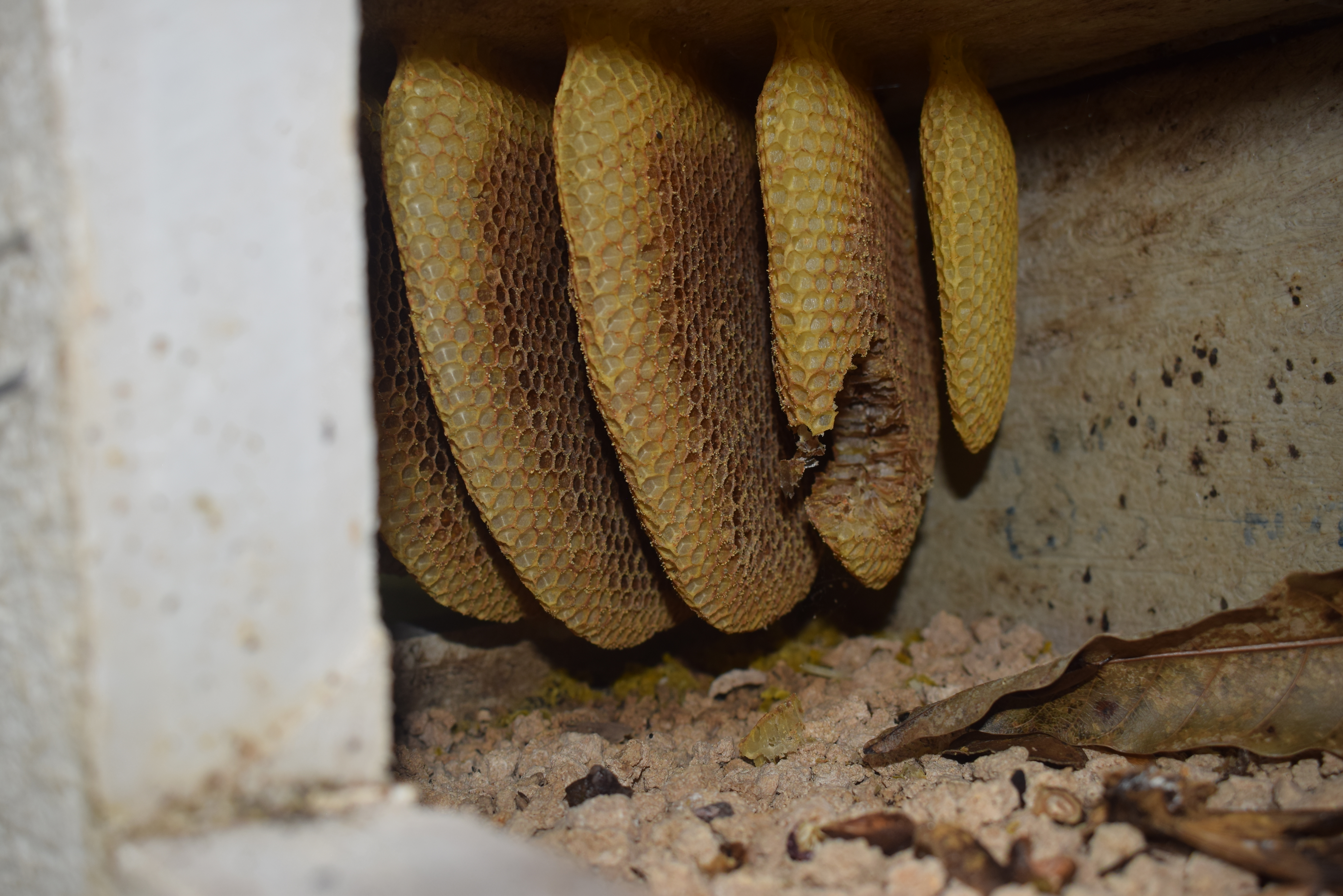
As the maintenance work is completed in the first nest box, the team moves to the next one. A quick observation makes the staff suspect that there might be other species inside the box. Josua takes a cautious look and notices honeybees flying in and out of the nest box, a common observation for the team. “This is not unusual; bees often use nest boxes. We will have to come back another time equipped with bee suits and a smoker to smoke the nest box to remove the bees. We will also remove the honeycomb. Then, we will make a follow-up visit to confirm that the bees have not returned. If they do return, we would then have to keep repeating the process until complete bee removal is successful”, explains Jauffrey.
The last nest box visited on the day, on the way to Case Noyale, is upsetting. An empty unhatched egg lies in the nest box, representing a failed breeding attempt from the known Mauritius Kestrel pair which had been observed in the area.